
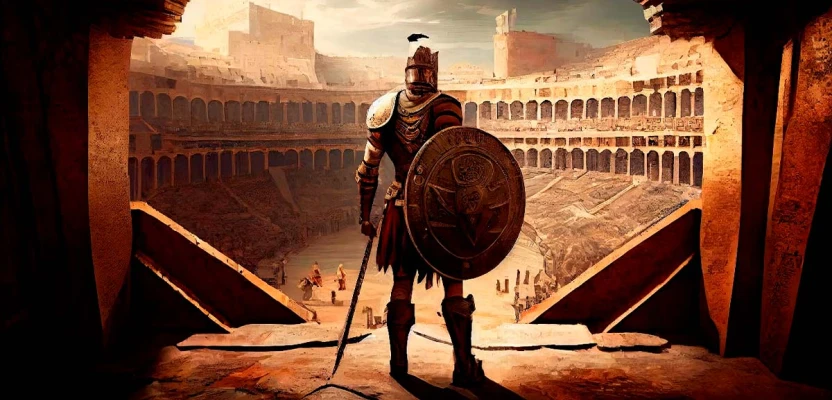
Bazaar Marketplace's 2025 "New Rome" manifesto was a public declaration of war on every rival darknet drug market: its operators boasted that their platform could not be breached or traced, claimed they had knocked Archetyp offline for weeks, and told vendors elsewhere to migrate or be wiped out. Read closely, the document is less a technical achievement than a piece of aggressive marketing, and its boldest promises collide with how these markets have historically ended.
What the Manifesto Actually Said
The text circulated on forums and mirror sites in 2025 and was written in the grandiose register of an empire announcing its founding. Bazaar framed itself as the destination that the entire hidden-service drug trade would eventually flow toward, borrowing the image of Rome as the city to which all roads lead. Competing platforms were cast not as peers but as provinces awaiting annexation.
Three ideas ran through the statement. First, the operators insisted their infrastructure had moved beyond the reach of attackers and investigators alike. Second, they took credit for disrupting a major competitor and promised to finish the job. Third, they extended an invitation to sellers on other sites, presented as a limited-time opportunity before the "cleansing" of the wider market began.
What the document did not contain is just as telling. There was no verifiable evidence for any of its technical boasts, no audit, no reproducible proof of the attacks it described, and no explanation of how the platform intended to survive the same pressures that have dismantled almost every one of its predecessors.
The Invulnerability Pitch
The centrepiece of the manifesto was a claim that Bazaar had made the very notion of being hacked or located obsolete. The operators described their stack as immune to distributed denial-of-service floods and free of exploitable flaws, and they bundled that assurance with references to advanced engineering, proprietary chemistry, refined concealment of parcels, and expertise in logistics and international law.
That list mixes two very different kinds of promise. Some items describe a website's security posture, while others describe a supply chain that the market itself would not normally control, since independent vendors handle production and shipping. Folding them together creates the impression of a vertically integrated operation, but it also makes the claims harder to evaluate and easier to inflate.
Security professionals tend to treat any declaration of perfect protection as a red flag rather than a reassurance. Software of any complexity carries bugs, Tor hidden services have repeatedly been de-anonymised through misconfiguration, and human operators make mistakes with servers, cryptocurrency wallets, and personal accounts. A market that announces it has nothing to fear is either very lucky so far or advertising a confidence it cannot back up.
Claiming Credit for Archetyp
The most provocative line in the manifesto asserted that Bazaar had crippled Archetyp for roughly six weeks and would see it destroyed entirely. Archetyp was one of the longest-running drug markets on Tor at the time, so targeting it was a deliberate way of signalling ambition and capability to the broader community.
Archetyp did fall, but not in the way the boast implied. In June 2025, a coordinated European operation backed by Europol and Eurojust took the platform down. Between 11 and 13 June, police in Germany, the Netherlands, Romania, Spain, and Sweden carried out raids, the market's servers in the Netherlands were seized, and its 30-year-old German administrator was arrested in Barcelona. Authorities reported that the site had more than 600,000 users, about 17,000 listings, and a trading volume of at least EUR 250 million, and they seized roughly EUR 7.8 million in assets.
Whether earlier DDoS waves against Archetyp came from Bazaar, from extortion crews, or from someone else is impossible to confirm from public information. Attacks of that kind are common in this ecosystem and attribution is notoriously murky. What is documented is that the decisive blow came from law enforcement, which undercuts any suggestion that a rival platform engineered the outcome.
The Vendor Recruitment Offer
Alongside its threats, Bazaar dangled an incentive: sellers with established, verified profiles on other markets could list on Bazaar free of charge for six months. Waiving fees for a set period is a familiar tactic in legitimate e-commerce, and here it served the same purpose of lowering the cost of switching.
The pairing of reward and menace was intentional. Sellers were told, in effect, that the opportunity would not last and that platforms outside the Bazaar fold would soon be targeted. That framing pressures vendors to commit quickly, before they have time to judge whether the new venue is trustworthy or simply eager to collect their customer base.
Vendor reputation is the most valuable asset in these markets, which is why recruitment campaigns focus so heavily on it. A platform that captures the top sellers tends to pull buyers along with them, so an aggressive onboarding offer is as much about seizing market share as it is about generosity.
Why Markets Use Fear as Marketing
Darknet markets compete in an environment with no regulators, no courts, and no consumer protection. Trust is built through reputation, uptime, and perceived resilience. A manifesto that projects dominance is a way of manufacturing trust: if users believe a platform is too strong to fail, they may be more willing to deposit funds and route business through it.
Fear also plays a role in shaping vendor behaviour. Threatening to "burn down" competing sites raises the perceived risk of staying elsewhere, especially for sellers who have already lived through sudden closures. Even an empty threat can be effective if it arrives at a moment when the market is already unsettled.
The timing of Bazaar's statement fits that pattern. The years leading up to it had seen a run of high-profile closures, leaving many vendors and buyers searching for a stable home. Messaging that promised permanence was well suited to an audience exhausted by disruption.
The Wider Collapse That Preceded Bazaar
Bazaar's rise did not happen in a vacuum. In mid-2024, Abacus Market, then widely regarded as the largest English-language drug market, abruptly went dark in what was broadly interpreted as an exit scam, with operators disappearing alongside user deposits. Before that, other major sites had either been seized by police or vanished on their own.
Each of these events scattered sellers and buyers across the remaining platforms. That churn creates openings for newcomers that can absorb displaced traffic quickly. Bazaar's manifesto can be read as an attempt to present itself as the natural successor during one of those periods of upheaval.
History offers a sobering pattern here. Silk Road, AlphaBay, Hansa, Dream Market, Hydra, and many others each enjoyed periods when they looked unstoppable. Nearly all of them ended through seizure, exit scams, or internal collapse, often after reaching exactly the kind of dominance Bazaar said it wanted.
Separating Hype From Track Record
A fair assessment has to acknowledge that Bazaar was still running at the time its rivals were disappearing. Survival in this space is not trivial, and outlasting competitors such as Archetyp and Abacus gave the operators a talking point that sounded persuasive to their audience.
Survival, however, is not proof of invulnerability. Many of the markets later dismantled by police had been infiltrated for months before their closure, operating normally while investigators gathered evidence. The Hansa case in 2017 is a well-known example: Dutch police secretly ran the site for weeks after seizing it, collecting information on users who believed it was safe.
The safest conclusion is that Bazaar's manifesto describes aspirations and marketing rather than demonstrated facts. Its staying power is real so far, but staying power has never been a reliable predictor of how long any hidden-service market will last.
The Risks of a Single Dominant Market
If Bazaar or any other platform truly managed to absorb the bulk of darknet drug commerce, the ecosystem would become far more concentrated. That concentration cuts in several directions at once, and few of them favour the people using the market.
For law enforcement, a single dominant hub is an attractive target, because one successful operation could expose a huge share of vendors, transaction records, and cryptocurrency flows. For users, the same concentration means a single exit scam could wipe out an enormous pool of deposits in one stroke, with no alternative venues ready to absorb the fallout.
Researchers sometimes compare this to a monoculture in agriculture: uniformity may look efficient, but it leaves the whole system exposed to a single point of failure. A fragmented landscape of many smaller markets is messier, yet it tends to be more resilient to any one collapse.
What the Episode Reveals About Darknet Culture
The "New Rome" rhetoric highlights how much of the darknet market economy runs on narrative. Platforms sell not only listings but also stories about their own security, longevity, and power. Manifestos, forum announcements, and public feuds are tools in that storytelling, aimed at winning attention in a crowded and distrustful field.
It also shows the increasingly hostile relationship between competing markets. DDoS campaigns, smear posts, and recruitment raids have become routine features of the landscape. Bazaar's statement simply made that hostility explicit, turning what is usually a background conflict into an open declaration.
Finally, the episode is a reminder that law enforcement remains the most consequential actor in this space. Whatever rivals claim, the decisive endings of major markets in recent years have overwhelmingly come from coordinated police operations, exit scams by the operators themselves, or a combination of both.
Frequently Asked Questions
What is the Bazaar "New Rome" manifesto?
It is a 2025 statement from the operators of Bazaar Marketplace announcing their intention to dominate the darknet drug trade. It claimed the platform was immune to hacking and tracing, took credit for disrupting Archetyp, and urged vendors on other sites to switch before competing markets were attacked.
Did Bazaar really take down Archetyp?
No public evidence supports that. Archetyp Market was dismantled in June 2025 by a European law enforcement operation coordinated by Europol and Eurojust, which seized its servers in the Netherlands and arrested its administrator in Spain. Any earlier disruption Bazaar claimed cannot be independently verified.
Can a darknet market actually be unhackable?
Security experts generally reject the idea. Complex software always contains flaws, hidden services can be exposed through configuration mistakes, and operators can be identified through financial trails or personal slip-ups. Claims of total immunity are best treated as marketing.
Why would one dominant market be risky?
Concentration creates a single point of failure. One police seizure could expose a large share of the trade, and one exit scam could erase a vast amount of user funds at once, with fewer alternative venues to absorb the disruption.
Bazaar's manifesto is best understood as a bid for attention and market share at a moment when the darknet drug economy was reeling from closures and scams. Its promises of permanence and invincibility echo those made by many earlier platforms, almost all of which eventually disappeared. Whatever becomes of Bazaar, the episode illustrates how heavily these markets depend on bravado, and how quickly that bravado can be overtaken by investigators, internal betrayal, or the simple fragility of systems built on anonymity and mutual distrust.

Comments 1
The Bazaar is just a good market with high-quality substances, it is not necessary to fight with everyone, you guys will be fine anyway, I wish you good luck!