
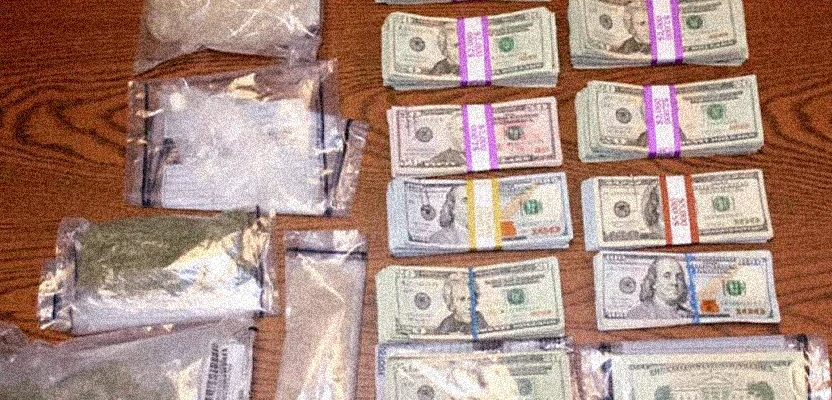
Rui-Siang Lin, known to thousands of customers only as "Pharaoh" or "Faro", was arrested at New York's JFK Airport on May 18, capping one of the larger darknet market prosecutions in recent years.
The Scale of the Operation
Incognito Market ran from October 2020 until March 2024 and functioned as a full-service narcotics supermarket: buyers browsed listings, paid in cryptocurrency, and received shipments. Under Lin's sole control sat more than a thousand vendor accounts and over 200,000 registered customers.
The Money Trail
Court documents paint a big operation: investigators executing search warrants in 2022 and 2023 uncovered 1,312 seller accounts, 255,519 customer accounts and 224,791 transactions. Marketplace revenue topped $83 million, with Lin personally pocketing more than $4 million in commissions. Drugs sold included methamphetamine, cocaine, amphetamine and ecstasy, more than $100 million worth in total.
The Exit That Backfired
When law enforcement closed in during March 2024, Lin didn't wind down gracefully, he shuttered the market, refused refunds, and allegedly threatened to leak customers' transaction histories unless they paid an extra fee. That final act likely hardened the case against him.
What He Faces
If convicted, Lin is looking at life in prison on charges including running a criminal enterprise, drug conspiracy, money laundering and selling counterfeit narcotics. For the hidden market scene, his arrest removes one of the biggest US-facing drug bazaars of the early 2020s.
On May 18, 2024, federal agents took Rui-Siang Lin into custody at John F. Kennedy International Airport, ending a pursuit that had been building for months. Lin was not an anonymous administrator hiding behind layers of encryption; he was the person prosecutors describe as the principal operator of Incognito Market, a darknet storefront that functioned for more than three years as a functioning wholesale drug bazaar. His arrest arrived shortly after the platform itself disappeared from the internet, and the sequence of events, from operational peak to sudden shutdown to a terminal at an airport, tells a story about both the reach of hidden online commerce and the fragility of the people who run it.
A Marketplace Modeled on the Surface Web
Incognito Market was never the kind of small-time escrow shop that defined the earliest years of the hidden web. From the moment it opened in October 2020, it was engineered to feel like an ordinary e-commerce experience, just relocated behind Tor. Buyers logged in with credentials, browsed vendor storefronts arranged by category, read product descriptions with photographs, and checked out using cryptocurrency. There was no negotiation ritual and no reputation handshake required before a purchase. For anyone who had ever used a conventional online retailer, the interface would have felt strangely familiar.
That familiarity was deliberate and commercially effective. Lin ran the enterprise essentially alone at the top, sitting above a sprawling network of sellers who handled the actual inventory, packaging, and shipping. More than a thousand vendor accounts operated under the platform's roof, each offering everything from small personal quantities to kilogram-scale shipments of stimulants. Above them sat a registered customer base that court records later quantified at roughly a quarter of a million accounts. It was, in effect, a complete supply chain for narcotics, managed through a single portal.
The platform's product catalog concentrated heavily on amphetamine-type stimulants. Methamphetamine, cocaine, amphetamine, and ecstasy formed the backbone of what was sold, with listings spanning cheap pressed pills to high-purity powder in bulk. Because every transaction ran through marketplace escrow and marketplace-controlled messaging, Lin's operation collected data about virtually every buyer and seller who used the service. That centralized record would become one of the most consequential byproducts of the entire enterprise.
The Money Behind the Curtain
When investigators finally seized the platform's infrastructure, the financial picture that emerged was far larger than most darknet markets managed during their lifetime. Revenue flowing through Incognito exceeded $83 million over its roughly three-and-a-half-year run. Lin's personal take, generated through the commission structure he built into every sale, surpassed $4 million. Those figures reflect only what could be tied to identifiable transactions; the true scale of activity, including deals arranged through the platform's communication channels, was almost certainly greater.
The technical detail of how the money moved matters because it illustrates the operational maturity Lin achieved. Cryptocurrency payments flowed into wallets controlled by the market, were converted through mixing and exchange services, and were disbursed to vendors after delivery confirmation. Lin maintained the infrastructure that made this possible: the servers, the escrow logic, the dispute-resolution framework, and the accounting of commissions owed to himself. He was not merely a figurehead; he was the chief financial officer, systems administrator, and policy maker of a criminal corporation.
What distinguished Incognito from countless other markets that rose and fell was longevity. Many darknet bazaars collapsed within months under law enforcement pressure, internal fraud, or exit scams. Incognito endured from late 2020 through early 2024, surviving the shutdown of major competitors and adapting as the ecosystem shifted. For users, that stability made it a default destination. For investigators, it meant a deep, well-documented criminal enterprise that eventually could be mapped in granular detail.
The Investigation That Followed the Shutdown
By the time Lin was taken into custody, federal investigators had already spent more than a year inside the market's data. Search warrants executed in 2022 and 2023 yielded a trove of internal records: 1,312 seller accounts, 255,519 customer accounts, and 224,791 individual transactions. These were not estimates extrapolated from sampled data. They were records pulled from the platform's own systems, preserved by investigators who had quietly infiltrated the operation while it was still running.
The completeness of that dataset changed the nature of the prosecution. In many darknet cases, authorities can prove that a market existed and that drugs were sold, but struggle to identify individual buyers or to quantify proceeds. Here, the platform itself had functioned as a record-keeper for a criminal economy. Every purchase carried a timestamp, a quantity, a price, a shipping address, and often a message history. For Lin specifically, the records also documented his direct control over the marketplace, his handling of disputes, his management of vendor accounts, and his collection of commissions.
The investigation also revealed the human scale of the operation. Hundreds of thousands of customer accounts represented not abstract statistics but real individuals who had placed real orders for illegal narcotics. Many of those orders resulted in actual shipments traversing the United States Postal Service and private carriers. The market's infrastructure had effectively industrialized drug distribution, turning what had once been fragmented street-level dealing into a logistics operation with standardized packaging, tracking numbers, and delivery expectations.
The Collapse and Its Final Act
Incognito Market ceased operating in March 2024, roughly a year before Lin's arrest became public. The circumstances of the shutdown were anything but graceful. Rather than announcing a planned closure, the platform vanished, leaving buyers and sellers stranded with funds held in escrow and orders in various stages of fulfillment. Vendors who had shipped product waited for payouts that never arrived. Customers who had prepaid for narcotics received neither merchandise nor refunds.
According to investigators, Lin did not simply disappear. Before the platform went dark, he allegedly communicated with users, demanding additional payments under threat of exposing their transaction histories. The leverage he held was the market's own data: years of purchase records, shipping details, and private messages belonging to a quarter-million registered users. For many darknet participants, that information was worth more than the lost funds. The demand for hush money, if substantiated, would have been an extraordinary act of extortion layered on top of an already criminal enterprise.
The shutdown timing also suggests that Lin believed he was acting while pressure was mounting. Markets often close preemptively when they detect infiltration, when law enforcement begins making arrests among affiliated vendors, or when the risk of continued operation outweighs the remaining profit. Whatever triggered the March 2024 closure, it did not shield Lin from accountability. Investigators had already accumulated the evidence they needed, and his subsequent travel to JFK Airport placed him within easy reach of federal agents.
The Arrest at JFK
Lin's capture at John F. Kennedy International Airport on May 18, 2024, was the culmination of a coordinated federal operation. Airport arrests of this kind typically follow months of surveillance and travel monitoring, with agents positioned to intercept a suspect at a point of vulnerability: a departure gate, a customs checkpoint, or a ground transportation pickup. Lin's choice to travel through one of the busiest airports in the world suggests either urgency, routine business, or a miscalculation about his exposure.
The location of the arrest carried symbolic weight. JFK is the primary gateway for international travel into the United States, and a darknet market operator being taken into custody there underscored how thoroughly the hidden drug trade had become globalized. The marketplace may have been accessible only through Tor, but its supply chains, its customers, and its profits all moved through ordinary physical and financial infrastructure. Lin's physical presence at a major American airport was, in a sense, the visible edge of an invisible economy.
Following his arrest, Lin was processed through the federal criminal justice system and faced an indictment that outlined years of alleged criminal conduct. The charges reflected the full architecture of the enterprise: conspiracy to distribute narcotics, operating a criminal enterprise, money laundering, and distributing counterfeit drugs. Each count carried substantial prison exposure, and the aggregated potential sentence, if all counts were pursued to conviction, was effectively life imprisonment.
What the Case Reveals About Darknet Markets
The Incognito Market prosecution offers a window into how darknet commerce actually functions at scale, and how vulnerable it remains to sustained investigation. Lin's operation succeeded for years because it offered reliability: consistent uptime, professional customer service through platform messaging, escrow protection for buyers, and a steady supply of vendors. That reliability attracted a loyal customer base and generated enormous revenue. It also created a centralized target, because every feature that made the market trustworthy also generated records.
The case also demonstrates the asymmetry of modern cyber investigations. Lin and his vendors believed they were protected by pseudonymity, encryption, and cryptocurrency. They were, to a degree. But the market's own business model required collecting information about users, mediating transactions, and coordinating physical deliveries. Each of those functions produced evidence. Investigators who patiently mapped the marketplace, traced cryptocurrency flows, and followed shipping patterns were eventually able to convert Lin's operational success into prosecutorial leverage.
For the broader darknet ecosystem, Incognito's fall is part of a recurring pattern. Markets rise on the promise of anonymity, scale, and stability, then collapse under the weight of their own data once law enforcement achieves infiltration or when internal disputes trigger shutdowns. The platforms that survive longest are not necessarily the most secure; they are the ones whose operators make fewer mistakes over a longer period. Lin made his mistakes, and the market's comprehensive record-keeping ensured that those mistakes would be documented in extraordinary detail.
The Human Cost Behind the Numbers
It is easy to discuss the Incognito Market case in terms of dollars, transaction counts, and cryptocurrency flows, but the human consequences are worth pausing over. The narcotics sold through the platform entered American communities through the mail, packaged to evade detection and delivered to addresses across the country. The customers included individuals struggling with addiction, recreational users seeking convenience, and resellers feeding local markets. The vendors, many of whom were themselves part of the same underground economy, risked prosecution alongside Lin.
The shutdown without refunds was particularly cruel in that context. Customers who had paid for drugs in advance lost their money entirely. Vendors who had shipped merchandise waited for escrow releases that never came. Lin's alleged demand for additional payments under threat of exposure compounded the harm, effectively monetizing the fear of his own customers. For a man who had built a business on the appearance of trustworthiness, the final chapter revealed the transactional nature of that trust: it lasted only as long as it was profitable.
What Comes Next for Lin
Lin's prosecution is expected to proceed through the federal courts, where the evidence gathered from the marketplace's seized data will form the core of the government's case. The volume of records, 224,791 transactions and associated communications, provides prosecutors with an unusually detailed account of the enterprise's operations. If convicted on the principal charges, Lin faces the possibility of life in federal prison, a sentence that would reflect both the scale of the drug distribution and the money laundering that sustained it.
Beyond Lin himself, the case raises questions about what happens to the hundreds of thousands of user accounts documented in the seized records. Whether federal authorities pursue individual buyers, vendors, or mid-level administrators remains an open question, but the data exists and the infrastructure for further prosecutions has been established. For the darknet market scene, Incognito's collapse removes one of the most established US-facing platforms of its era and signals that sustained, patient investigation can eventually penetrate even the most professionally operated hidden markets.
The arrest of Rui-Siang Lin at JFK Airport was not merely the capture of a fugitive. It was the dismantling of a criminal enterprise that had industrialized drug distribution for more than three years, generated over $100 million in narcotics sales, and left behind a documentary trail so complete that it may take years for investigators and courts to fully process. For Lin, the consequences are severe. For the broader hidden market ecosystem, his fall serves as a reminder that the anonymity which makes these platforms possible is also their greatest vulnerability, and that no amount of technical sophistication can fully shield an operator from the evidence his own marketplace creates.

Comments 0