
Dark web search engines help people discover publicly reachable Tor onion services by searching a partial index of their pages. Ahmia offers a documented, filtered search service; VormWeb emphasizes selective indexing and result categories; DarkSearch requires particularly careful identification because a familiar name alone does not establish who operates a website. The useful comparison is not which engine promises the most links, but which explains its coverage, makes results understandable, and helps you locate an address you can independently authenticate.
What an onion search engine actually searches
An onion search engine maintains its own collection of information about Tor services. It can discover pages through submitted addresses, links from other pages, automated crawling, or manual selection. A query searches that collection rather than examining the entire Tor network in real time. This distinction explains why a working website may be absent, while a vanished website may continue appearing in results. Discovery, crawling, indexing, and removal happen on different schedules.
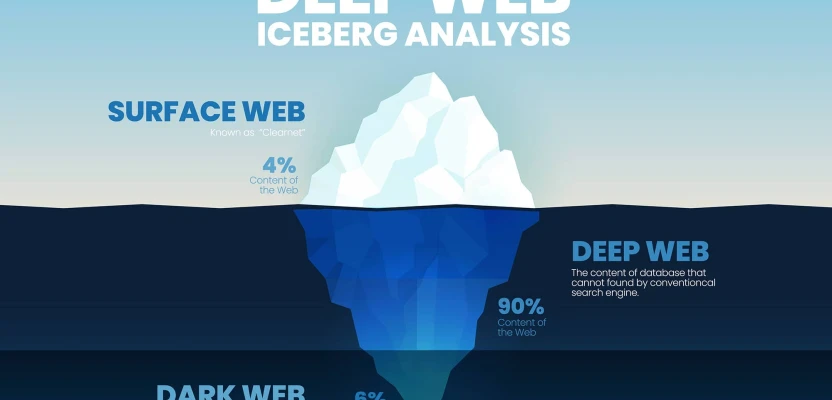
The deep web and the dark web are not interchangeable categories. A private email inbox belongs to the deep web because ordinary public search does not expose its contents, but it need not use Tor. Onion services use a special addressing and connection system within Tor. Public search engines can sometimes reveal references to onion addresses on ordinary websites, yet that is different from maintaining a searchable index of the pages behind those addresses.
Search also has limits imposed by the publisher. A crawler cannot necessarily enter an account-only forum, interpret every interactive page, or access a service restricted to invited visitors. Consequently, a large advertised index does not translate into comprehensive visibility. For practical research, a smaller collection with useful descriptions can outperform a much larger pile of inaccessible addresses.
Ahmia: a starting point with visible policies
Ahmia identifies itself as a search service for Tor hidden services and provides both search and explanatory pages on the ordinary web. Its public materials identify project leadership and explain content filtering. These are useful accountability signals because a reader can examine statements about the service rather than relying entirely on an anonymous recommendation. They do not make every indexed destination reliable or every result relevant.
Filtering is part of Ahmia's design, not an incidental omission. Its published policies describe removing child sexual abuse material and applying query restrictions related to sexual content. That matters when interpreting results: an empty response might reflect a policy decision rather than the absence of relevant pages across Tor. Describing Ahmia as an unrestricted catalogue would therefore misrepresent how its search works.
For someone seeking a public-interest resource, such as a publisher's onion edition or privacy documentation, Ahmia can provide a useful initial set of leads. Read the result as a discovery aid, then authenticate the destination elsewhere. Ahmia's own blacklist page warns about impersonating copies of its service, demonstrating that even the search interface needs address verification. A recognizable logo is not sufficient evidence of identity.
VormWeb: selective discovery rather than sheer volume
VormWeb's published explanation emphasizes choosing genuine services and reducing clones and spam. It describes a combination of manual indexing and crawling, rather than presenting discovery as an entirely automated race for size. The project says it began in November 2020 as a general-web search alternative before shifting toward darknet services. That account is more specific than treating it as a newly launched onion-only project in a later year.
The same documentation describes a minimal interface without JavaScript, advertisements, or trackers. These are the operator's stated design choices, which readers can distinguish from an independent audit of every technical behavior. A simple interface may reduce distractions and make addresses easier to inspect, but simplicity alone cannot prove anything about server-side logging, ownership, or the authenticity of an indexed destination.
VormWeb also explains that results receive security classifications and that English queries may work better when another language produces nothing. Treat classifications as the engine's assessment, not as a guarantee about future behavior. A service can change ownership, alter its content, or disappear after review. For comparison purposes, the most important question is whether the classification has a clear explanation that helps you evaluate the result.
DarkSearch: identify the service before judging it
DarkSearch is a name that should prompt an identity check before any feature comparison. Names associated with darknet search can circulate through old reviews, replacement domains, unrelated products, and imitation pages. An article mentioning a service does not establish that a similarly named website currently has the same operator. Without confirming the specific service, claims about advertising, privacy, index size, or access requirements are easy to attach to the wrong destination.
Start with documentation that connects the product name, its current domain, and its operator or project history. Look for consistent links from established project channels and a clearly described search function. Distinguish a public keyword search engine from a commercial intelligence platform or an interface requiring an account. Those products may serve different audiences even when their marketing uses similar language about dark web visibility.
If an interface includes sponsored placements, evaluate them separately from ordinary matches. If it offers an API, investigate the documentation rather than assuming an old integration still works. These checks produce a more useful assessment than assigning a permanent reputation to the name DarkSearch. Where identity or current functionality remains unresolved, record that uncertainty instead of filling the gap with inherited claims from older comparison articles.
Compare results with a repeatable test
A fair comparison begins with a small set of benign tasks rather than a single broad query. Try locating a known publisher, finding documentation about a privacy tool, and searching for a general topic such as anonymous publishing. Use equivalent wording on each engine and note the date. This reveals differences in coverage and usability without treating a large result count as evidence of quality.
For each task, examine whether the results contain distinct destinations, readable descriptions, and addresses that actually match the stated organization. Count repeated mirrors and near-identical titles separately from genuinely different resources. A list containing twenty variations of one site offers less discovery value than its length suggests. Likewise, a prominent match with a persuasive description may still be unrelated to the question you asked.
Separate relevance from availability. A result can accurately describe a resource that is temporarily offline, while a quickly loading page can be irrelevant or deceptive. If an engine displays a crawl date or availability check, record what that timestamp measures. A recent automated connection does not establish that a human reviewed the content or confirmed its ownership.
Verify onion addresses at the source
The strongest address confirmation usually comes from the organization you intended to visit. A publisher may list its onion service on its established HTTPS website, in official help documentation, or through another authenticated channel. Compare the complete address with that source rather than trusting a search snippet. Current version-three onion hostnames contain 56 characters before the suffix, so visual familiarity is a weak way to detect a substitution.
An onion address provides a cryptographic connection to a service identity, but it does not automatically connect that identity to a familiar company or person. Someone can create a separate onion service and copy another organization's appearance. Tor can correctly connect you to that imitation if you supplied its address. The missing step is establishing which address belongs to the organization, not merely establishing that a Tor connection works.
Agreement among multiple search engines is supporting evidence, not definitive authentication. Several indexes may discover the same copied page or repeat information originating from one directory. Prefer independent confirmation from the publisher over a vote among search results. Once you establish the correct address, a bookmark reduces dependence on repeatedly rediscovering it through changing rankings or look-alike entries.
Understand what search privacy does and does not mean
Using Tor changes how network connections are routed, but the search service still receives the query you submit. Avoid putting identifying details into searches when they are unnecessary to the task. An account number, private email address, or unique personal story can reveal information through the query itself. Transport privacy and the sensitivity of submitted text are separate issues, and neither should be confused with the other.
A search engine's ordinary-web interface and its onion interface can also involve different connection paths. Tor Browser can reach both, while an ordinary browser generally cannot connect directly to onion services. Use addresses published by the project when choosing an interface. A third-party gateway is another intermediary, not an equivalent replacement for a direct onion connection through Tor Browser.
Check what the operator actually says about retention, analytics, accounts, and external links. An interface without advertisements may still have an unclear data policy; an open-source component does not by itself prove which configuration runs on a server. Compare documented commitments and observable behavior without turning either into an absolute promise. Privacy evaluation works best when it asks specific questions instead of relying on a reassuring label.
Build a practical discovery workflow
Begin by defining the resource you need and deciding whether search is necessary at all. If you already know the organization, its official website may publish the relevant onion address directly. Otherwise, use a descriptive query in Ahmia or VormWeb, review several relevant matches, and refine the wording. Move from a broad subject to a specific publisher or document rather than opening every result indiscriminately.
When an address fails, check the original publisher's announcement before assuming that the resource has permanently disappeared. Temporary downtime, address migrations, and stale index entries can produce similar symptoms. Keep research notes about which source supplied an address and when you verified it. That small amount of provenance makes future checking faster and helps separate a genuine update from a replacement link of uncertain origin.
Choose an engine based on the job it performs well, not an overall winner declared without evidence. Ahmia's published policies make its filtering easier to investigate; VormWeb's stated selection model offers a different approach to discovery. A service called DarkSearch needs its own current identity and feature checks. Combining careful search with source authentication is more durable than depending on any single brand or ranking.
Frequently Asked Questions
Can Google find onion websites? Google may show public pages that mention an onion address or discuss an onion service. That does not mean it provides a comprehensive index of onion content or can open that destination for you. Distinguish finding a reference on the ordinary web from searching pages retrieved directly from Tor services.
Is Ahmia's filtering proof that every result is trustworthy? No. A filtering policy describes what the engine tries to exclude, not a certification of all remaining pages. A listed service may contain inaccurate claims, use misleading branding, or change after indexing. Confirm organizational identity separately and evaluate the actual page rather than transferring confidence from the search engine to the destination.
Why do Ahmia and VormWeb return different answers? They can discover different addresses, revisit pages at different times, and apply different selection or filtering rules. Query handling and the information stored about each page can vary as well. Different results are therefore expected. They are a reason to compare coverage, not automatic evidence that one engine is malfunctioning.
Does a missing result mean a website has closed? Not necessarily. The engine may never have indexed it, may have removed it under a policy, or may be using outdated information. A service could also have moved or become temporarily unreachable. Look for a current announcement from its operator before drawing a conclusion from absence in search results alone.
The most useful dark web search engine is the one that supplies relevant leads you can verify. Compare Ahmia's documented filtering with VormWeb's selective indexing, investigate the precise identity behind any DarkSearch offering, and judge destinations using evidence from their publishers. Search establishes possibilities; address verification and careful reading turn those possibilities into dependable research.

Comments 0